
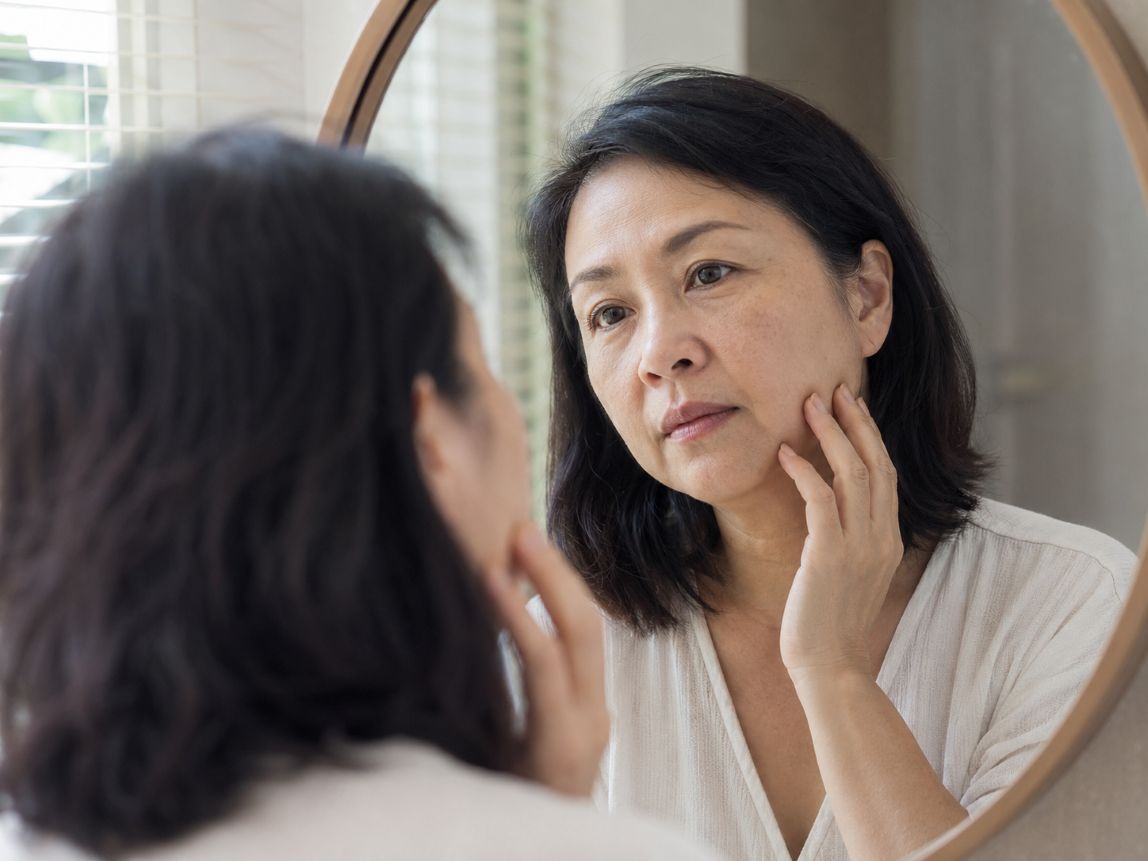
Skin changes gradually throughout adulthood. The National Institute on Aging explains that older skin commonly becomes thinner, drier, less elastic, and less plump. Declining collagen and elastic fibers contribute to these changes, while years of ultraviolet exposure can add wrinkles, uneven tone, and age spots.
For adults who notice several changes at once, basic skincare may help with comfort and prevention, but it cannot address every concern. This is one reason some people visit an anti-aging aesthetic clinic in Bangsar for a professional assessment, particularly when they want to understand changes involving pigmentation, texture, firmness, or facial volume. Hebe Clinic lists pigment and skin services alongside facial sculpting approaches, reflecting the different concerns that may be evaluated in an aesthetic setting.
Which Skin Changes Tend to Become More Noticeable?
1. Fine Lines and Loss of Firmness
Collagen gives skin much of its structure, while elastin helps it stretch and return to shape. The National Institute on Aging notes that these supporting components decline with age. Skin may gradually become less firm, and lines can become easier to see.
Sun exposure can speed up visible aging. The American Academy of Dermatology describes ultraviolet damage as a major contributor to photoaging. Regular sun protection can therefore help limit additional wrinkles, spots, and uneven coloring.
2. Uneven Pigmentation and Age Spots
Dark spots are not caused by age alone. Repeated UV exposure also affects how pigmentation develops, especially on areas that regularly receive sunlight.
The American Academy of Dermatology explains that sun damage can produce age spots, blotchy coloring, wrinkles, and other visible changes. Pigmented spots are often harmless, but unusual or changing marks deserve medical attention because some skin cancers can resemble ordinary spots.
3. Dryness and Rougher Texture
Skin can become noticeably drier with age. Oil and sweat production may decrease, and the skin can become thinner. The National Institute on Aging reports that these changes can contribute to dry, rough, or itchy areas.
Simple care can make a meaningful difference here. The American Academy of Dermatology recommends gentle cleansing and regular moisturizing for older skin. Moisturizer helps trap water and can temporarily make some fine lines appear less noticeable. Adults going through midlife may also be interested in learning more about the relationship between hormonal changes and skin health, since shifts associated with menopause can affect dryness, texture, and other aspects of the skin. Hormone-related skincare products should still be considered carefully and discussed with a healthcare professional when appropriate.
4. Slower Skin Renewal
Aging also affects how quickly the epidermis renews itself. Research reviewed through the National Library of Medicine shows that epidermal cell turnover slows with age as the reproductive activity of skin cells declines. This can contribute to thinning, slower recovery, and changes in texture.
Basic skincare can support the protective barrier, but persistent roughness or uneven texture may require a different approach. The appropriate option depends on what is causing the change.
5. Changes in Facial Volume
Aging does not affect the skin surface alone. Facial contours can change as collagen declines and soft tissues lose volume.
Cleveland Clinic explains that lower collagen levels can contribute to thinner skin, laxity, and reduced facial volume. Dermal fillers are one non-surgical approach used to restore volume in selected areas, although injections have potential risks and should be performed by appropriately trained medical professionals.
Which Concerns May Respond to Professional Treatment?
Some visible changes can be improved, although no treatment stops normal aging. Mayo Clinic reports that laser resurfacing may improve fine lines, age spots, uneven coloring, texture, and some forms of sun damage. It cannot correct significant skin sagging.
Depending on the concern, professional options may include prescription topical treatments, chemical peels, laser or light-based procedures, and injectable treatments. Pigmentation may require a different approach from volume loss or loose skin, so a treatment that suits one person may be inappropriate for another.
Risks also matter. Mayo Clinic notes that laser procedures can lead to swelling, infection, scarring, and changes in pigmentation. Some pigment-related risks require particular consideration in people with darker skin tones. Medical history, skin type, medications, previous scarring, and treatment expectations should therefore be reviewed beforehand.
What Can Everyday Skincare Still Do?
Professional procedures do not replace basic skin care. The American Academy of Dermatology recommends broad-spectrum sunscreen with SPF 30 or higher, regular moisturizing, and avoiding tanning as important ways to reduce further photoaging.
These habits can improve dryness, protect the skin barrier, and help prevent additional UV damage. However, the Academy also points out that creams, gels, and lotions cannot address every visible sign of aging.
Aging Is Normal, and Treatment Is Optional
Wrinkles, pigmentation changes, dryness, and shifts in facial shape are expected parts of getting older. They do not automatically require cosmetic treatment.
The most suitable approach depends on the concern, realistic expectations, health history, potential risks, cost, and personal preference. Professional assessment can help distinguish concerns that may respond to treatment from changes better managed with skincare and sun protection. Ultimately, aesthetic care should remain a personal choice rather than an expectation that normal aging needs to be corrected.