
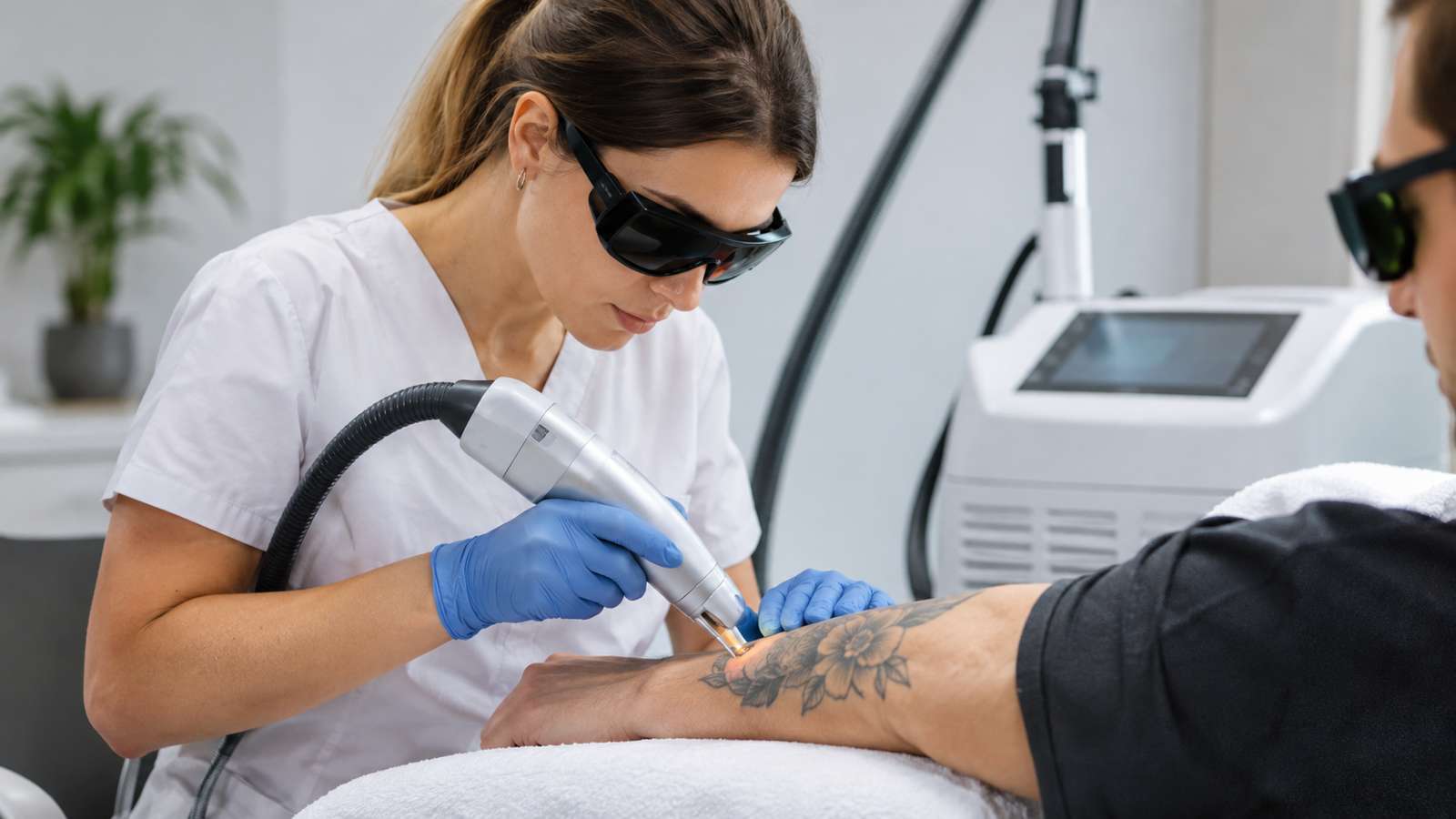
Laser tattoo removal results vary from person to person. Some tattoos fade noticeably after several treatments, while others require more sessions or never disappear completely. Ink colour, tattoo age, pigment depth, skin characteristics, and laser technology all influence the outcome. Understanding these differences helps people make informed decisions before beginning treatment.
Professional assessment is an important starting point. Facilities such as Think Again Laser Clinic in Fortitude Valley offer individual consultations to examine tattoo characteristics and discuss possible treatment approaches. However, even with suitable equipment and careful planning, results remain unpredictable. The skin’s response and the body’s ability to clear fragmented pigment also affect progress.
How Laser Tattoo Removal Works
Laser tattoo removal uses concentrated pulses of light to target pigment embedded in the skin. The ink absorbs the energy and breaks into smaller particles. Immune cells then help remove these fragments gradually through the body’s natural processes.
The American Academy of Dermatology (AAD) explains that multiple treatments are necessary because lasers cannot safely break down every layer of ink during one session. The skin also needs sufficient recovery time.
Unlike methods that remove or damage surface skin, modern tattoo removal lasers aim to target pigment while limiting injury to surrounding tissue. However, effectiveness depends on several factors.
7 Factors That Affect Tattoo Removal Results
1. Tattoo Ink Colour
Different tattoo pigments absorb different wavelengths of laser light. This explains why certain colours fade more easily than others.
The U.S. Food and Drug Administration (FDA) identifies black and dark blue as generally easier to remove. Green, red, and yellow can be more challenging. Multicoloured tattoos may require several wavelengths to target their different pigments.
White and flesh-coloured inks present another complication. Some pigments can darken after laser exposure, making further treatment difficult.
2. Tattoo Age
Older tattoos sometimes respond more readily to removal because their pigment may have faded naturally over time. Sun exposure and gradual immune activity can contribute to this process.
Newer tattoos generally contain more visible pigment, although age alone cannot predict how many sessions will be required.
Clinical guidance published in StatPearls identifies tattoo age among the characteristics considered when estimating treatment requirements. Ink composition, application technique, and skin condition remain equally important.
3. Ink Density and Depth
Heavily saturated tattoos usually require more treatment than lightly shaded designs. Dense blackwork, overlapping tattoos, and elaborate professional artwork often contain substantial amounts of pigment.
Ink depth also matters. Professional tattoos commonly place pigment deeper within the dermis, while amateur tattoos may have shallower and less consistent ink placement.
A 2026 systematic review published in the Journal of Cosmetic Dermatology found that amateur tattoos generally responded more favourably than professional tattoos. These findings highlight why tattoo size alone cannot determine treatment difficulty.
4. Skin Type and Pigmentation
Skin pigmentation influences how laser energy interacts with the treated area. Melanin, the pigment responsible for skin colour, can absorb certain laser wavelengths.
People with darker skin tones may therefore face a greater risk of unwanted pigmentation changes if inappropriate settings are used.
The StatPearls clinical review emphasises selecting laser wavelengths and treatment parameters based on both tattoo colour and surrounding skin.
Recent tanning, existing scars, and skin sensitivity should also be considered. Careful assessment helps reduce avoidable complications.
5. Laser Technology
Traditional Q-switched lasers deliver energy in nanosecond pulses. Picosecond systems use considerably shorter pulses to fragment tattoo pigment.
Both technologies can produce meaningful tattoo clearance. However, their relative effectiveness depends on the equipment, wavelength, and pigments being treated.
A systematic review published in the Journal of the American Academy of Dermatology reported advantages for picosecond lasers when treating certain blue, green, and yellow pigments.
Meanwhile, a 2026 review in the Journal of Cosmetic Dermatology found that consistent superiority across all applications had not been established. The evidence supports choosing suitable technology rather than assuming one system guarantees better results.
6. Treatment Intervals
Tattoo removal requires patience because pigment clearance continues after each appointment.
The FDA explains that several weeks between procedures allow skin recovery. Treating the same area too frequently may increase irritation without providing proportional improvements.
Appropriate intervals depend on healing progress, treatment intensity, and individual response. Practitioners may adjust scheduling when inflammation or sensitivity persists.
Following a carefully planned schedule is generally more useful than trying to complete treatments as quickly as possible.
7. Professional Assessment and Aftercare
Practitioner experience matters when selecting equipment, setting laser energy levels, and recognising potential complications.
Before treatment, professionals should review skin history, tattoo characteristics, medications, and previous reactions to cosmetic procedures.
Aftercare is equally important. Patients should follow instructions for cleaning and protecting treated skin. Avoiding unnecessary friction, excessive sunlight, and picking at blisters supports normal healing.
The AAD identifies redness, swelling, and occasional blistering as possible short-term reactions. Persistent or worsening symptoms require medical attention.
Why Individual Treatment Plans Matter
Two tattoos that appear similar may respond differently because their pigments, application methods, and surrounding skin are different. Understanding laser use in dermatology helps explain why different skin conditions and treatment goals require specific approaches. Factors such as pigment characteristics, skin sensitivity, and laser settings must be considered before developing an individual treatment plan.
During consultations, practitioners commonly examine several characteristics:
- Tattoo size, location, and colour composition
- Ink density and estimated pigment depth
- Skin tone, sensitivity, and existing damage
- Previous tattoo removal treatments
- Desired outcomes, including complete removal or partial fading
A personalised assessment helps establish realistic treatment expectations. Brisbane residents, for example, can access individual tattoo assessments at the Fortitude Valley facility mentioned earlier.
However, a consultation provides an informed estimate rather than a guaranteed number of sessions. Treatment plans may change as the skin responds.
Setting Realistic Expectations for Tattoo Removal
Successful tattoo removal generally involves progressive fading rather than immediate clearance.
The FDA confirms that complete removal may be impossible in some cases. Multiple sessions are usually necessary, particularly for complex or heavily pigmented tattoos.
Possible side effects include temporary redness, swelling, blistering, and changes in skin pigmentation. Less common complications include infection and permanent scarring.
Photographs taken throughout treatment can help document progress. Patients should also understand that residual pigment may remain even after an extended treatment course.
Clear communication with a qualified practitioner helps establish achievable goals without unrealistic promises.
Conclusion
Laser tattoo removal outcomes depend on interconnected factors, including ink colour, tattoo age, pigment density, skin type, technology, treatment intervals, and professional care.
Research supports laser treatment as an established approach to tattoo reduction, but individual results remain variable. Careful assessment, appropriate aftercare, and realistic expectations provide a more informed foundation for treatment decisions.